Showing posts with label Duteau Creek water system. Show all posts

Tuesday, June 21, 2016

Duteau Gets Pounded With Rain


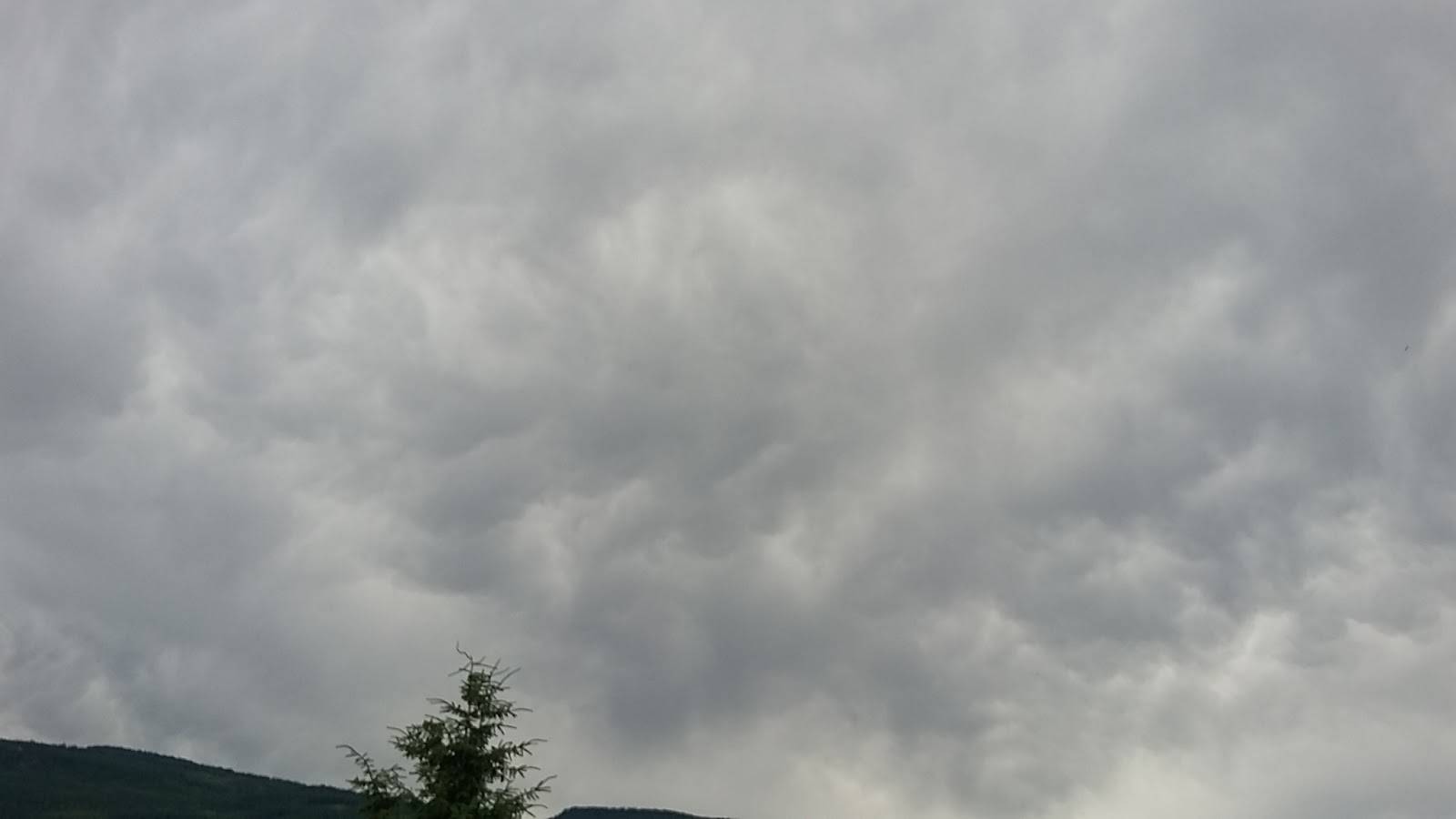
Time and again during May and June of this year, the Aberdeen Plateau's weather systems have dropped a ton of rain into Duteau Creek's reservoirs.

A few recent photos:


"If these systems result from an ebbing el Nino," suggests Kia, "we're all thrilled!"


It's frankly wonderful to turn the irrigation system off at Highlands Golf.

But wait.
Water rates will simply increase...because GVW won't receive sufficient revenue to meet their requirements.


Friday, September 4, 2015

Bureaucrats Turned Capitalists, and Back Again


A blunt description of Greater Vernon Water.

Gougers.
Creative accountants.

Was there even a water emergency this year?
Stage 1 water restrictions--threatened during late August to be extended to Stage 2--wasn't really necessary, was it?


The GVW water bureaucrats seemed almost surprised when revenues fell as people started conserving water.
The GVW water capitalists seem determine to fund the Master Water Plan despite the failure of the $70 million borrowing referendum for their six projects last winter.


"The big question is...is the reduced consumption request (by imposing Stage 1 restrictions) justified?
 Is the reduction in revenues resulting from the reduction in usage justified?
Will the increased rates to recover shortfalls of revenue be justified?"  G.Kiss
 

First, today's Morning Star story, entitled "Utility Looks at Revenue", by Rolke:

"It may appear that Greater Vernon is awash with cash but revenue flow could slow to a trickle yet.
Greater Vernon Advisory Committee directors were told Thursday that utility revenue is up $1.2 million for the first six months of 2015.

'Summer started earlier this year and revenue spiked,' said Stephen Banmen, general manager of finance.  'There have been concerns about water restrictions and the impact on water revenue and what we're looking at is revenue is ahead of the game.'

Compared to 2014, consumption fee revenue for the first two quarters has gone from $2.8 to $3.6 million, or an additional $800,000.

Base fee and other revenue are ahead of 2015 budget projections by $400,000.

Higher revenue had been anticipated in the 2015 budget because of a two per cent rate increase.  The current trend isn't expected to continue.

'Overall consumption is down for the third quarter so we won't meet budget projections in the third quarter,' said Banmen, adding that those figures aren't compiled yet.

A report states that if fourth quarter consumption is the same as 2014, third quarter consumption would have to drop 22 per cent from the same period in 2014 to not meet revenue targets.

Director Gyula Kiss raised some questions Thursday.  'Are we charging too much?; said Kiss, who also wanted to know if a 2016 rate hike can be avoided.

No commitment was made either way.  'We will have that discussion,' said chairperson Juliette Cunningham of upcoming budget talks."    Morning Star Sept.4/15.


As Director Kiss asked some time ago:  "The big question is...is the reduced consumption request (by imposing Stage 1 restrictions) justified?  Is the reduction in revenues resulting from the reduction in usage justified?  Will the increased rates to recover shortfalls of revenue be justified?"

Gyula Kiss continues to make lucid observations:

First, the 40 year water demand chart:


The next chart shows the actual consumption table put together from the water utility's Annual Reports spanning 2011 to 2014.  Note the difference in predicted and actual consumption.  Did we build too large a system?  Did we pay too much for it?  If we were expecting to use 9,670 in 2011, should we not use that figure as the base for the 10 per cent reduction in water consumption?  After all, the utility was predicting that volume!  If the planners expected to have the consumption based on those figures, is it not possible that our water rates are influenced by the reduced consumption?  If we cannot provide the necessary volumes today (at 6,000 ML per year), what can be expect in the year 2062?

"...to be in the Stage 1 zone in September, we would have to
 use over 7,000 MLs from the Duteau reservoir.
 Is this likely to happen?"  G.Kiss.


Below is the July 15th volume graph, with some explanation.  During the first nearly three months of hot weather, GVW customers used about 4,000 MLs of water from Duteau.  On September 14th, GVW advises that the irrigation system will begin its Fall shutdown.

In order to be in the Stage 1 zone in September, we would have to use over 7,000 MLs from the Duteau reservoir.  Is this likely to happen?


Repeating the big question from Director Kiss:

"Is the reduced consumption request justified?"
"Is the reduction in revenues resulting from the reduction in usage justified?"
"Will the increased rates to recover shortfalls of revenue be justified?"


Oh...almost forgot the photo of yet another weather system inundating the Aberdeen Plateau area, this time on Tuesday, September 1st, 2015:


And repeating a simple chart, courtesy of Citizens for Changes to the Master Water Plan, showing what bureaucrats-turned-capitalists have created.


"The road's probably still too muddy to update the August 15th reservoir level to reflect actual storage versus estimated numbers," offers Kia.

No doubt.
 

Sunday, July 12, 2015

Water Issues Dominate Newspaper


...as they should, considering the topic is THE most talked about among residents of the North Okanagan.

The Morning Star published the following today:

"Water Committee Membership Determined (Rolke):

A previous role in Greater Vernon's failed water process won't stop individuals from taking a leadership role in the future.

The Greater Vernon Advisory Committee voted Thursday not to rule anyone out for membership on the master water plan stakeholder advisory committee.

'Who's on it shold be based on what they bring to the table,' said director Bob Fleming.

It had been recommended that participants in the advisory committee not have prevoius involvement in the master water plan process, which led to an unsuccessful $70 million referendum last fall.

'Anyone involved before from this (GVAC) committee on the previous technical advisory group would be disqualified,' said director Bob Spiers.

Staff insists that it wasn't trying to restrict who takes part in the advisory committee.

'The intent was to say we're trying to provide as fresh a look as possible,' said David Sewell, Regional District of North Okanagan chief administrative officer.

'We don't want to be burdened potentially with the biases associated with the development of previous plans.'

The Greater Vernon Chamber of Commerce has asked for a seat at the stakeholders' table.

'We request that the regional district reflect on ways in which the business and investment community can be engaged in any discussion as you move forward,' said Jaron Chasca, chamber president, in a letter.

'The establishment of a multi-stakeholder steering committee such as was done with the development of the regional cultural plan may be of value in this situation.'

Juliette Cunningham, GVAC chairperson, says the chamber's request will be considered.

'They have a good communications network and getting feedback from their members,' she said.

GVAC will begin advertyising for potential stakeholders committee members soon.

'We will have to see how much interest there is.  We want buy-in from taxpayers,' said Cunningham.

'We want them to understand why we need a master water plan.'

"...Didn't want to be burdened with biases?" intones Kia, adding "then install an independent consultant in place of staff engineers at the table, opposite SAC members." 


"Rules May Restrict Funds (Rolke):

A politician forecasts tighter water restrictions will leave the utility's budget high and dry.

The Greater Vernon Advisory Committee has initiated stage one water restrictions in the hope of decreasing consumption during the hot weather.  (BLOG NOTE:  No public record exists of GVAC having met mere days before their regularly scheduled July 9th meeting when the stage one water restrictions were announced in the newspaper, so the public believes bureaucrats enacted the restriction without GVAC directors' approval.)

'I agree with conservation but we will lose revenue for the utility,' said director Bob Spiers, adding that a 10 per cent reduction in residential consumption could reduce revenue by $158,000 in Vernon in the third quarter.

Staff insists stage one restrictions are needed because of the ongoing dry conditions. 

'We are doing heightened awareness and targeting water waste,' said Zee Marcolin, utility manager.  'We want people to know what they should be doing.  There's a lot of watering of roadways.'

Marcolin added that larger agricultural customers are also being contacted about conservation.

'We want to hit this hard so we can stay away from stage two.'
  
( BLOG NOTE:  Want to see just how much more you'll pay WHEN you reduce your domestic water consumption by 10 per cent?  Click on this link, and see Table 1 and Table 2.  Created by Gyula Kiss, GVAC member. Even more revenue will be lost than the tables indicate...Hillview Golf Course has drilled a well and constructed a reservoir...their invoice for 2014 was projected to increase to $43,000 from $33,000). 

"The water authority isn't telling people of that effect, are they?" says Kia.

 
"Watersheds draw scrutiny (Rolke):

Mudboggers roaring around watersheds have local communities calling for action.

The Okanagan Basin Water Board discussed the issue of source protection Tuesday and specifically recreational activities that threaten water quality and critical infrastructure, such as dams.

'I don't know how we get around the recreational aspect and desecration?' said director James Baker.

Much of the discussion revolved around the Greater Vernon Water Utility's experience with people entering the Duteau Creek watershed.

'They love to get out in their ATVs and four-by-fours,' said Renee Clark, GVWU water quality manager.

'The reservoirs get drawn down in the summer and it looks like a great place to go and play.'

Another concern is what all-terrain vehicles do to the integrity of dams holding back reservoirs.

'If they breach, the inundation area is Lumby and there would be property damage.  Who would be liable for that?  We would' said Clark, adding that the water utility owns the dam and is responsible for safety.

'We have tried to fence the dams but it's a big area and new routes are found.'

There have also been problems with other infrastructure being damaged and warning signs being shot and utility staff must clean up the trash and human waste left behind (there are no outhouses at the reservoirs).

Clark says the situation at Duteau Creek is experienced in watersheds throughout the Okanagan and something must be done.

'Let's find some way to do this from a political and policy perspective' she said.

'If we can protect the source, treatment is a lot less.'

Presently, a license of occupation through the provincial government doesn't allow for exclusive use of a watershed by a utility.

Among the possible options are leasing the land to prevent recreational activities or establishing recreational campsites at reservoirs so there are(sic...would be) some guidelines in place.

Clark isn't convinced that formal campsites will work given summer conditions at reservoirs.

'The lakes are drawn down in August so they're not a place people will hang out at (to camp) but people will still ATV,' she said.

Doug Findlater, OBWB chairperson, points out that there was an issue with ATVs in the Bear Creek watershed, off of Westside Road, and various agencies came together to create formal trains and enforcement.

'They took control of it and allowed people in but under controlled conditions,' he said."

"Public abuse of the area has been going on for decades, and GVW is only yabbering about it now?" asks Kia, adding, "heaven forbid they'd actually do something effective like contacting the provincial government and implement something...anything to improve the situation.  Nope...they're too busy controlling the rest of us to focus on watershed abuse!"


And two letters to the editor:

"Real Change Needed in Water Plan:
I suppose it's encouraging to learn from your article of June 14 that yet another water review is on tap.  Personally, I would have preferred some decisions.  My second choice would have been to take a blank piece of paper and have an independent consultant start afresh.

Instead I see I will get my least druthers approach, a finagling rehash of what we voters have rejected by a two to one margin or, to be precise, by 7918 nays to 3999 yeas.  I thought the message thus sent to the water gurus and politicos was quite clear; people want a no frills water system that is safe and reliable and does not cost twice as much as ratepayers pay in Kelowna and Penticton.

This is not rocket science.

Every community needs water and has a water utility to provide it for them at reasonable cost.  Sometimes glitches occur such as Walkerton.  After all to err is human.

Unfortunately, the North Okanagan has a murky water syndrome.

Greater Vernon takes water from far away ponds fed by another watershed that reaches us via creeks flowing through cow pastures, dog parks, farm fields and other assorted odds and sods that do not add to its clarity then spends mega bucks to make it potable before selling most of it at a fraction of what domestic users are soaked to grow food for cows.  Brilliant.

One good thing about exorbitant water costs is how good that is for conservation.

Domestic ratepayers in Greater Vernon have cut back their water usage by a third to a half over the past five years depending upon the time period/data selection used; from 350 cubic meters to maybe as low as 175, certainly less than 250.

The water utility raised rates, ratepayers then used less water.  That meant the water utility was not able to cover its costs.  Obvious answer:  reduce costs.  Nope.

The water utility opted to raise base fees instead.  Today, most domestic ratepayers in Greater Vernon pay more in base fees than they do for the actual metered water they use.  Mind boggling, beyond belief you say, check your water bill, then weep.

The people that brought us this are now going to do an in-house review of their past recommendations and everything is going to be hunky-dory.

Yeah, right.  Juliette Cunningham presides over this charade, she chairs the Greater Vernon Advisory Committee.  Give her a dingle or an e-mail.

Make your views known and do it now.  By next year, more money will have gone down the Greater Vernon Water Utility drain as they keep plugging away doing the same old, same old.

Councillors Spiers of Vernon and Kiss of Coldstream are trying to rectify this water madness but they need your help.

Two votes are not enough to get real change for real betterment.  Do your part and twist some political arms."
                                       Jim Bodkin


Source:  CCMWP Terry Mooney


and another:

"Greater Vernon Water:

It doesn't take an MBA to see stakeholder advisory committee (SAC) is entering a fixed horse race assuring that only a rehashing of Greater Vernon Water projects will be on the table -- the projects that the public refused to fund during the referendum.

The public is outraged area water rates are almost three times the rate of Kelowna users.

Under the bureaucrat-penned terms of reference SAC will review GVW's hastily-scribed list of assumptions.

This means the public at large will not be allowed to submit letters to the SAC group.

How's that for betraying the public which was instrumental in demanding change.

The grassroots group Citizens for Changes to the Master Water Plan, has touched the public pulse with its clearly-understood May presentation at the Schubert Centre.

The public wants Okanagan Lake as a water source, as Kelowna has, with no demand by IHA for filtration, because Okanagan Lake is a deep repository of glacial gravels.

In all of these years GVW bureaucrats haven't got around to protecting the Duteau slough (an apt public description), complaining about vandalism and mud-boggers.

Why hasn't IHA protected the Duteau source?  Water reservoirs on the Lower Mainland are closed to the public and mostly fenced. 

We are misguided if we believe politicians are in charge."
                                           Barb Mitchell


"Angry because Tower Ranch in Kelowna--at more than 200 acres--pays only slightly more than double what Highlands Golf--at 15 acres here--pays annually," says Kia.

"And angry because the OUC community garden--at less than 2 (yes, two) acres--used almost twice as much water as Highlands Golf," adds Kia.


People are watching to see how the leadership thingy goes...


Friday, June 19, 2015

GVAC Fiasco Initiates New Press Release

(Noted from a Comment:  "The RDNO board meeting Wednesday was not held a day before the regular GVAC meeting as there was no regular GVAC meeting scheduled for Thursday June 18. GVAC regular meetings are the first Thursday of the month.")


Convenient indeed for GVW bureaucrats and the majority of GVAC officials that today's Morning Star story omitted reference to a Motion on the floor during the June 11th meeting.   Misplaced in the Agenda by GVAC chair Cunningham, it was quickly defeated when it eventually resurfaced.

Without debate!

First, the newspaper story:

"Master water plan making waves, Richard Rolke

Regional District of North Okanagan officials are trying to calm turbulent waters.

During Wednesday's board meeting (blog: which preceded by one day the regular GVAC meeting), chief administrative officer David Sewell clarified his views on the review of the Greater Vernon master water plan. 

"I don't want the impression that directors are being led by staff," said Sewell.

On June 11, the Greater Vernon Advisory Committee members considered 21 assumptions (blog note:  pages 3 of 6 here) that impact the master water plan. 

During that discussion, GVAC director Gyula Kiss stated "Who is directing it?  It looks like staff is directing it."

Sewell insisted that he is not singling out any specific politician but says that while staff provides advice, elected officials will determine the direction of the master water plan.

"We (staff) have a role and I want the public to be cognizant that those roles are in place," he said.

Director Catherine Lord expressed concern that Kiss' comments could undermine the ability to address Greater Vernon's long-term water system.

"We need to make sure everyone is on board because if the impression of this is it's run by staff, there will be a (public) backlash," she said.

Similar views also came from director Juliette Cunningham, who is GVAC chairperson.

"We can't undermine staff as we work through the process," she said, adding that the suggestion that a final plan outcome has been determined is wrong.

"We don't know what we will do, if we will ask for an independent review."

Kiss stands by his comments.

"Is staff not directing the process?" he said. "Staff provides advice and those who do not want to think for themselves accept that advice.  I question the advice because that's what electors want me to do."

Kiss added that an overwhelming majority of voters opposed borrowing $70 million for the master water plan in November's referendum.

"The taxpayers pay for staff and they have a right to request information and I am a representative for taxpayers."


GVAC Directors obviously haven't read this...

 "Boss Sewell said 'want' in each of two sentences," offers Kia, adding "it's what the public 'wants' that'll prevail."


Citizens for Changes to the Master Water Plan 
Press Release (submitted via email)

The Citizens for Changes to the Master Water Plan are requesting that our political representatives go back to the "drawing board" and to make needed changes in the Terms of Reference (page 7 to 12 here) of the Water Plan Review crafted on June 10th and 11th.  

The Review is not the "fresh new look" requested by Citizens for Change and demanded by the referendum defeat last Fall.  The review proposed by GVAC last week has serious flaws in the composition of the participants, and in the Terms of Reference for the Stakeholders Advisory Committee.

In short:

  • the domestic water customer who is most affected by the current high water costs is under-represented;
  • persons with relevant expertise and experience are prevented from participating,
  • the process will be managed by RDNO staff who have clearly indicated their preference for the status quo, and, 
  • discussions are to be limited to the scope of the current Master Water Plan.

New ideas and approaches will not be allowed, even though regulatory requirements regarding water and water management have changed in recent years.

A vital component required to ensure objectivity, fairness, and protection of the public interest is missing from the structure and that is the inclusion of an "expert independent consultant" to ensure that real change occurs.

A Motion brought forward by Councillor Kiss, seconded by Councillor Spiers at the most recent GVAC meeting to place a moratorium on major spending arising from the current Master Water Plan was initially "misplaced" in the meeting agenda by Chairman Cunningham and then defeated without debate.

It is the view of the Citizens for Changes to the Master Water Plan that these actions indicate GVAC and staff's intent with regard to the review.  The review will not offer an unbiased, balanced, fresh new look.  As presently configured, it is heavily weighted to favour the status quo and maintains current practices which the public soundly rejected in the 2014 referendum.

Come on folks!  
We can do better than this.

Let's get back to a place of trust, goodwill and well-considered leadership to set in place a MWP that ensures our children and grandchildren a safe, secure, affordable water supply for the next 50 years.  A petition calling for the inclusion of an "independent consultant" is circulating throughout the Greater Vernon community.  CCMWP is asking all residential, commercial, recreational and agricultural water users to sign it, and send the message to our elected officials that we need real change.

Citizens for Changes to the Master Water Plan
Terry Mooney, 250.542.2847


...creating additional smoke 'n mirrors to fool people.


The Petition:

Here's the link to the Petition, folks.

Print a copy and get your neighbours and friends and to sign it.
After all, like you they are also concerned about high water rates and the dubious water source known as Duteau Creek on the Aberdeen Plateau.

While the petition doesn't, in its current form, ask for an "independent consultant" to review the Master Water Plan, that has been CCMWP's primary request since the formation of the grassroots group.


"First they ignore you,
then they ridicule you,
then they fight you,
then you win."
Gandhi


The public wants RDNO bureaucrats and the GVAC Chair to know they're being watched.
 

Wednesday, May 13, 2015

Weak-Kneed RDNO Solution


Officials at the Regional District of North Okanagan actually believe that "the display of (licence) plates ...mandatory from June 1st" will solve the threat to Duteau Creek water system dams/reservoirs by mud-boggers. 

And today's Morning Star heading "Off-road activity hampers water supply" is laughable.

Hampers?
For heaven's sake, folks, they don't hamper our water system.

They threaten it.

You know...a threat, as in the destruction caused by terrorists.
Because that's what it could be.
The result anyway.

"Greater Vernon Water is continually having a problem with off-road vehicles roaring up and down the Grizzly, Aberdeen, Haddo and King Edward dams on the Aberdeen Plateau," states the newspaper today.
Water Quality Manager Renee Clark says "our biggest concern is dam failure if there's a lot of activity on the dams."  Apparently some dams are being used for hill climbs while mud-bogging has taken place in the reservoirs.

In the reservoirs?

Jeez, folks, you really think a law that off-road vehicles be licenced is going to eliminate that?
Off the cuff, I'm reminded of Canada's failed Gun Registry.
Seems the criminals--the bad guys--didn't get the memo.

And for RDNO officials to believe that "working with Natural Resource officers, Recreation and Trails BC and the RCMP" is going to fix that on a mountain mesa hidden from the valley bottom is sheer idiocy.

Where are the former rangers?
Where are forest patrols?
Likely provincial government cutbacks.
No commissionaires patrol the dams, the failure of which could impact downstream areas like Lumby as well as destroying the area's water supply.

Folks, this threat to the dams and downstream communities is no less than a terrorist threat, despite the only difference between mud-boggers and terrorists would be that the boggers didn't intend to drown a community or ruin a water system.  


Okanagan Basin Water Board photo


How is an "inadvertent" threat event to a downstream community and a water system any different than thwarting a terrorist attack?


"The Regional District has to grow some courage," suggests Kia, adding "they used airplanes to check whether people were filling pools during severe water restrictions one year."


Oh yeah, we're supposed to call the Natural Resource violation hotline at 1-844-676-8477 if we witness destruction up there.

Memorize the phone number, folks.


Friday, May 8, 2015

Anticipating a Drought-Response Summer


Oh oh.

It's been reported that both 107.5FM radio and Channel 4TV this morning carried announcements that the Okanagan has the lowest recorded snowpack recorded of the past three decades...and to prepare for possible severe drought conditions this year.

So let's have a look at some of the pertinent statements and water demands that the Drought Management Plan identified (in no particular order):

Agricultural irrigation accounts for a large proportion of the total (estimated to be up to 80% during peak days). Metered residential water use accounts for approximately 10% of the total supply, while Industrial-Commercial-Institutional (ICI) water users account for only 2% of the total supply (based on peak day demand estimates).

Unaccounted for water, which includes leakage, hydrant-flushing, fire-fighting, inaccurate meters, theft, and other similar uses, accounts for approximately 6% of the total supply.

In the summer months, average daily water use is as high as 173 ML/day, which is almost seven times higher than the winter base water use (approximately 25 ML/day).

The data indicate that peak flow rates occur between mid-July and mid-August. Peak day water use in 2010 occurred on July 29 at 212 ML/day (total from all sources). The maximum withdrawal rate during the peak water demand period is considered to be between 2 to 3 m3/s. The data indicate that there is a consistent peak in water use between 8 pm and 10 pm, with peaks at approximately 9:30 pm. The peak day water usage is considered to be reflective of domestic irrigation through manual watering.

Annual residential water use is expected to increase to 20,651 ML by 2041, which is directly related to estimated population growth. Annual agricultural water use is expected to decrease from 55% of total to 41% of the projected total annual water use due to growth in urban demand.

Spring rains serve to replenish the upland reservoirs, if not already full, for future water supply. The spring rains are important from the perspective of drought potential because these rains can avert a drought situation if a less than average snow pack is present and/or the reservoirs are not full entering into the spring.

Precipitation in the Vernon area is characterized by wet, rainy May-June followed by dry July-August. Vernon Climate Station (Station 1128581) and Vernon Coldstream Ranch (Station 1128580) are situated at valley-bottom locations. Thus, do not necessarily reflect climate conditions in the higher elevation watershed.

One recent example of the importance of spring rain occurred in 2010. Entering into the spring of 2010, GVWU was faced with low reservoirs levels from the previous year, combined with a lower than average snowpack. Just as GVWU entered into a Stage 3 drought situation, the area received higher than average rainfall in May/June.  The spring rain was largely responsible for replenishing the reservoirs and raising the drought level (to Stage 2).

Summer climate conditions directly affect rates of water consumption and upland reservoir levels, which is a factor influencing the potential for drought conditions in the GVWU service area. During hot, dry summers (July - August) outdoor water use for irrigation increases, putting greater pressure on the water supply.

Rain during the early summer months accounts for a considerable proportion (40%) of the total annual precipitation (487 mm). Much is localized and of a convective nature, so the distribution across the watershed is variable. In comparison, the total annual precipitation in Vernon is low compared to
Vancouver (1110 mm).

Various factors, including summer climate and irrigation demand, affect reservoir levels in the fall. Fall reservoir levels are an important factor influencing the potential for drought in the subsequent year as these levels establish a pre-winter supply status.

The Duteau Creek water supply is vulnerable to changes in runoff attributed to various watershed factors (Kerr Wood Leidal and Dobson Engineering, 2008; M.J. Milne and Associates Ltd., 2011). Watershed factors including loss of forest cover due to fire, mountain pine beetle attack and forest harvesting have the potential to affect the Duteau Creek water supply.

Approximately 24% of the watershed is comprised of pine-leading stands that are susceptible to Mountain Pine Beetle (M.J. Milne and Associates Ltd., 2011) and a portion of these stands will be salvaged through timber harvesting. Given the future loss of forest cover, effects on snow accumulation, snow melt, runoff and streamflow are expected. With respect to the water supply situation, increases in
runoff will be attenuated by the upland reservoirs. However, with the advancement of the spring freshet, reservoir inflows will occur earlier in the spring, and water will need to be stored (perhaps for longer periods of time). Otherwise, earlier melt conditions may affect low flow conditions later in the year.

Excerpts from:  Greater Vernon Water Utility (GVWU) Drought Management Plan, Update Revised October 2011, by Clarke GeoScience, Kelowna, B.C.


Finally, a compelling graphic to show the effect of ground covers on rainfall and soil stability:


"Using an 18-foot deep slough for most of the area's water sounds like the worst idea in 100 years," offers Kia.


Saturday, April 4, 2015

Advisory Committee Complicity?


Or is it that the Greater Vernon Advisory Committee is proving they have no power over bureaucrats?

Yet another compelling letter from a resident...B. Erickson speaks plainly, published in the Morning Star on April 3, 2015:


"Duteau Creek plan was rejected:

On November 15, 2014, the residents of Greater Vernon overwhelmingly rejected the referendum to borrow $70 million for the master water plan.

As a concerned citizen, I question how water officials and the Greater Vernon Advisory Committee appear to be creating mechanisms to move ahead with the master water plan in spite of the failed referendum.  Actions such as these speak loudly of manipulation, lack of accountability and to heck with the wishes of the taxpayers.

Do you not understand we are opposing funding more money for the Duteau Creek initiative?

The public remains opposed to chlorine and soon to be filtered water irrigating farms, acreages and golf courses.  Give irrigators back what they bought and paid for with their allocations.  We want raw water, which would totally eliminate the horrendous price increases we've all experienced and which show no evidence of decreasing.

Why do Kelowna residents pay a third of the amount that is paid by residents of Greater Vernon for water?

The answer is that Kelowna residents obtain their water from Okanagan Lake and filtration is not necessary.  If Greater Vernon used water from Kalamalka and Okanagan lakes, which was the recommendation of our first consultant, (blog author highlighting) we could also reap the benefits of the lower supply costs, enjoyed by Kelowna residents.

We reject the concept of Duteau Creek as a domestic source.

The presence of organic material creates the need to heavily chlorinate the water supply.  Chlorination adds another problem to the production of safe drinking water and that is the possible creation of cancer-causing trihalomethanes.

The Duteau process also creates Alzheimer-suspected aluminum content in our tap water.

Neither danger existed when raw water was drawn from the Duteau course for irrigation.

Water officials and elected representatives, are you listening to your residents?"
                      B. Erickson 


"Forgive the Advisory Committee, for they know not what they do," grins Kia.                   


Creating mechanisms?
Machinations, probably.